




.svg)

Win-Loss Analysis
Executive Teams


Learn how we capture in-depth buyer feedback—and how it can transform your business.
Book a demoThe only thing worse than losing an important deal is not knowing why.
Earlier in my career, I led the team responsible for closing what would be the biggest deal in our company’s history. We thought we’d done everything right, and we were confident that we’d win based on our technical capabilities and the relationship we’d formed with the prospect.
Then we got the news no sales leader ever wants to hear: They chose somebody else—and worse, we hadn’t even made it into the final round for consideration.
Our CEO was upset. He called everyone involved into a room and asked each person to give their take on why we lost. Each response was a carefully crafted “CYA” explanation that attempted to avoid taking any blame.
Finally, someone said, “Why don’t we just ask the prospect what we did wrong?”
So, we reached out. When we asked why we lost, they told us we were eliminated because our price point was too low.
“We didn’t even consider your RFP because we didn’t think you’d scoped the solution well enough, and we didn’t trust that you could deliver at that price point,” they said.
I was shocked. Nobody sitting around that table with our CEO had guessed that we lost because we were too cheap. It was a massive “Aha!” moment, and I realized that we had almost zero actual insight into what happens on the buyer’s side of the table.
If you’ve ever worked in a revenue-generating role, you probably have a story just like mine. When a major deal falls apart, everyone has assumptions—but it’s impossible to know the truth unless you systematically ask your buyers. That is why savvy organizations rely on a formal approach to win-loss analysis to capture the real reasons they win and lose directly from the source.
In this guide, we will be exploring win-loss analysis best practices to capture and act on buyer feedback to increase your win rate.
The way companies approach buyer feedback has evolved. Relying on drop-down menus in a CRM is no longer sufficient. Today's most successful revenue organizations structure their feedback initiatives around four best practices:
A world-class program must start at the top. Senior-level executives, especially the CEO, must endorse the initiative and establish a culture that values constructive criticism. Leadership must eagerly review buyer insights and translate them into action, viewing the program as an ongoing pulse check on sales performance and product-market fit.
How to apply: Put buyer feedback on the leadership calendar, not just the inbox. Programs that stick have a standing monthly or quarterly review where win-loss findings are actively discussed and assigned actions.
Great programs are fueled by actual conversations with the decision-makers at won and lost accounts. The best interviews are conducted by a neutral third party to bypass the "politeness bias" buyers feel when talking to the vendor that just pitched them.
Third-party interviewers receive higher response rates, are well-trained in asking the right probing questions, and have the technology in place to deliver the results at scale.
How to apply:
Collecting data is only half the battle; an effective program uses a systematic approach to tagging key themes from each interview. You must track these themes over time to identify the macro-trends that merit organizational action. This synthesis replaces anecdotal guesswork with undeniable, aggregated data.
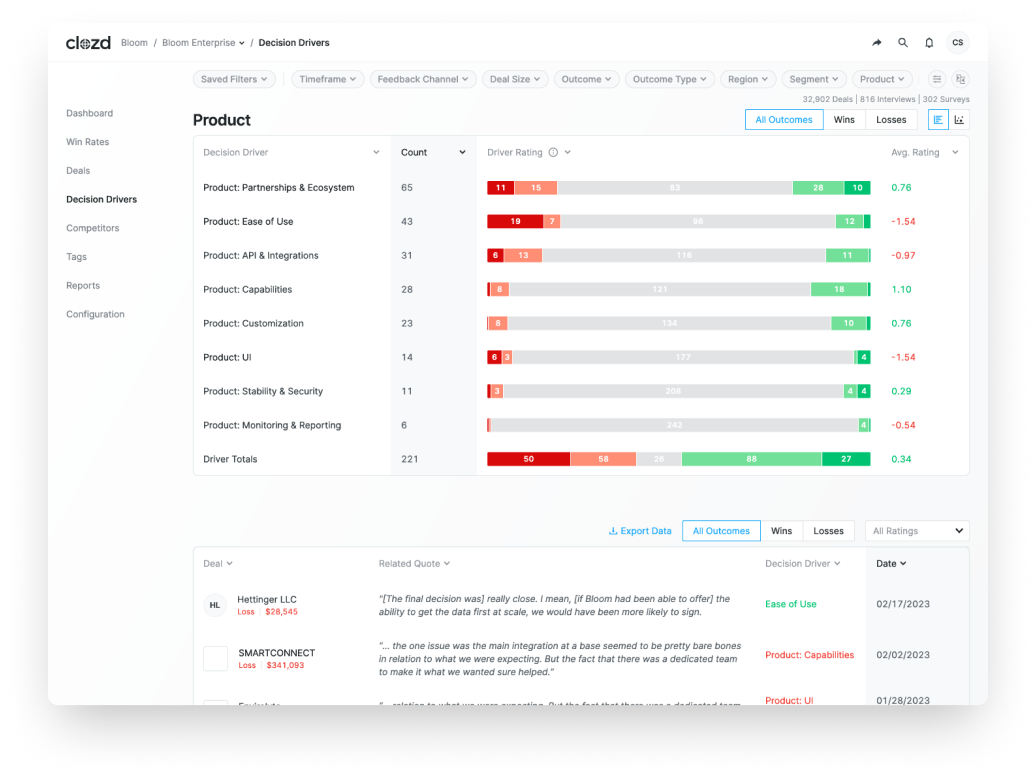
How to apply: Use a consistent, standardized tagging taxonomy across every interview so themes can be compared across quarters, not just described within a single report. Ad hoc note-taking is the most common reason synthesis breaks down as a program scales.
Your program must leverage technology to share buyer insights with stakeholders across your organization. If it’s easy for key leaders to search, study, and adopt the findings, you will foster an active, cross-functional dialogue. The feedback should actively shape your sales training, marketing content, and product roadmap.
How to apply: Route findings into the tools your teams already use (battlecards, onboarding decks, and CRM dashboards) instead of a standalone report. Insights that require someone to go looking for them rarely get used.
Companies that invest in mastering these competencies can achieve powerful results. In fact, a study by Gartner found that companies that invest in rigorous win-loss analysis may achieve as much as a 50% improvement in sales win rates (Source: Gartner).
Unlike other revenue tools that help you automate outreach and generate more pipeline, the ultimate goal of a formal interview program is to help you increase your win rate.
Many revenue leaders don’t realize that increasing their win rate by just a few percentage points can help them hit revenue goals more quickly than simply driving more top-of-funnel pipeline. Once you establish your program, you can measure its impact by analyzing your win rate across several contexts:
Not sure what a stronger win rate would actually be worth to your business? Use Clozd's sales win rate and ROI calculator to see how even a few points of improvement translate into pipeline and revenue."
A structured buyer feedback program is like film study for sports teams. Great teams use film study to review past games to uncover ways to improve their performance and increase the probability of success moving forward.
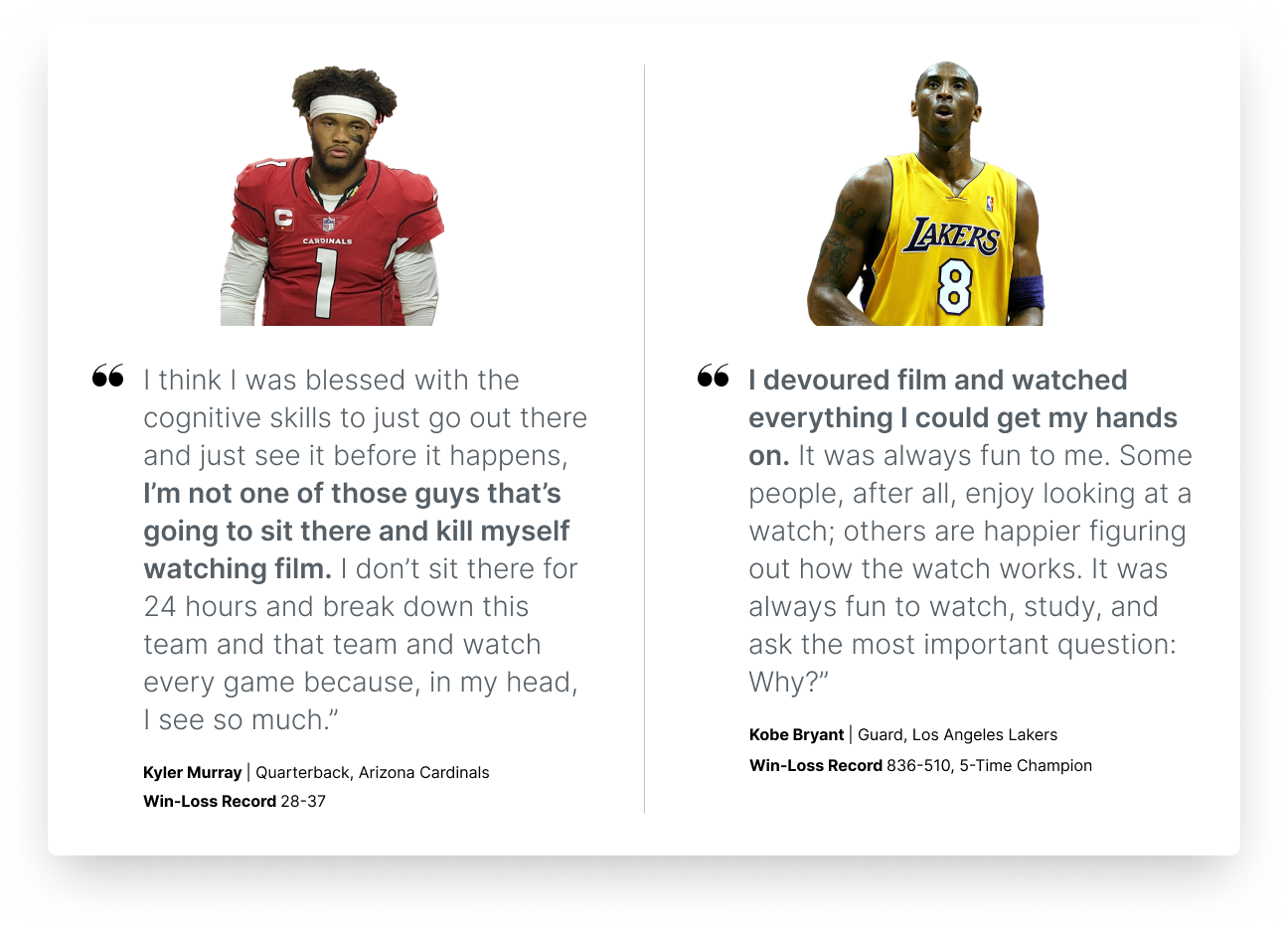
Like film study, post-decision interviews allow you to go back and review your closed opportunities to uncover the actual trends and insights that can influence future success rates, helping you differentiate your value proposition and sharpen your competitive edge.
Companies that neglect structured buyer feedback programs are missing a massive opportunity to increase win rates, sharpen their product strategy, and build a sustainable competitive advantage. By mastering the four pillars, you ensure your organization's strategy is always grounded in the reality of the market.
Learning about the importance of a win-loss analysis for organizational growth is the first piece of the puzzle. At Clozd, our mission is to help your company implement an ongoing win-loss analysis program to help you drive revenue and increase customer retention.
There's a wealth of resources that can help you design and implement an effective win-loss program at your own company. Here are just a few:
The four core competencies are: securing leadership buy-in, collecting high-quality data through neutral third-party interviews, systematically synthesizing themes across interviews, and building a process that gets those insights adopted and acted on across sales, marketing, and product.
How often should you conduct win-loss interviews?
Interview buyers within 30–90 days of the final decision so the details are still fresh, and aim to compile and present findings on at least a quarterly basis to track trends over time rather than one-off snapshots.
There's no universal number, but consistency matters more than volume. A steady cadence of interviews, evenly split between wins and losses, produces more reliable trend data than a large batch run once a year.
Yes, for most organizations. A neutral third party bypasses the "politeness bias" buyers feel when talking directly to the vendor, typically gets higher response and candor rates, and can sustain the process at scale without pulling internal team members off their core roles.
Product Marketing (PMM) has historically been considered the ideal internal owner because the role sits at the intersection of Sales, Product, and Strategy with the cross-functional authority needed to translate buyer feedback into business changes. However, Clozd’s research shows that any revenue-focused role benefits from win-loss insights, and that executive buy-in is key to driving organization-wide adoption.

Clozd is consistently ranked as the best win-loss solution for ROI, ease of use, and quality of support—by the revenue leaders who use our platform every day.




.png)


.svg)