




.svg)

Uncover the why behind every customer decision
“It’s unfathomable why more people don’t do this. I mean, it’s literally company-changing to get this data on a consistent basis.”
—Diana Massaro, CMO at Skyhigh Security
So, as a quick introduction, let's start with three basic questions ...
Executives
Boards and executive teams with access to accurate, real-time buyer feedback data make more informed decisions—and they make them quicker (with less debate) and act on them with more confidence.
Sales
Decision Intelligence helps your sales team know exactly what’s working and what isn’t, which enables them to replicate best practices and avoid repeating costly mistakes.
Marketing
Decision Intelligence exposes gaps in marketing content and messaging, and it deepens the marketing team’s understanding of buyer preferences, needs, intentions, and criteria.
Product marketing
Product marketers are often the first to recognize the importance of buyer feedback data in optimizing product messaging, product strategy, and sales enablement.
Product
Win-Loss Analysis highlights the real strengths and weaknesses of your company’s solutions, which enables product leaders to refine their product roadmap.
Client success
Many win-loss programs also include interviews with current customers that uncover the root causes of client attrition—which helps increase retention.
Question 3: What’s the potential ROI of win-loss programs?
Companies that invest in comprehensive win-loss analysis achieve a measurable return on their investment. Respected firms—including Gartner and Aberdeen Group—have studied and confirmed how win-loss analysis leads to increased sales win rates.
“A formal and rigorous win-loss analysis program enables better segmentation, product strategy, and sales enablement. Those that take a more comprehensive approach have seen a 15–30% increase in revenue and up to 50% improvement in win rates.”
—Todd Berkowitz, Research VP at Gartner
Weighted (Revenue) Win Rate
The insights and outcomes of a comprehensive win-loss analysis program are closely tied to revenue generation, and the return on investment is measurable.
Even a small improvement to their sales win rate will drive a significant return on investment for most organizations.
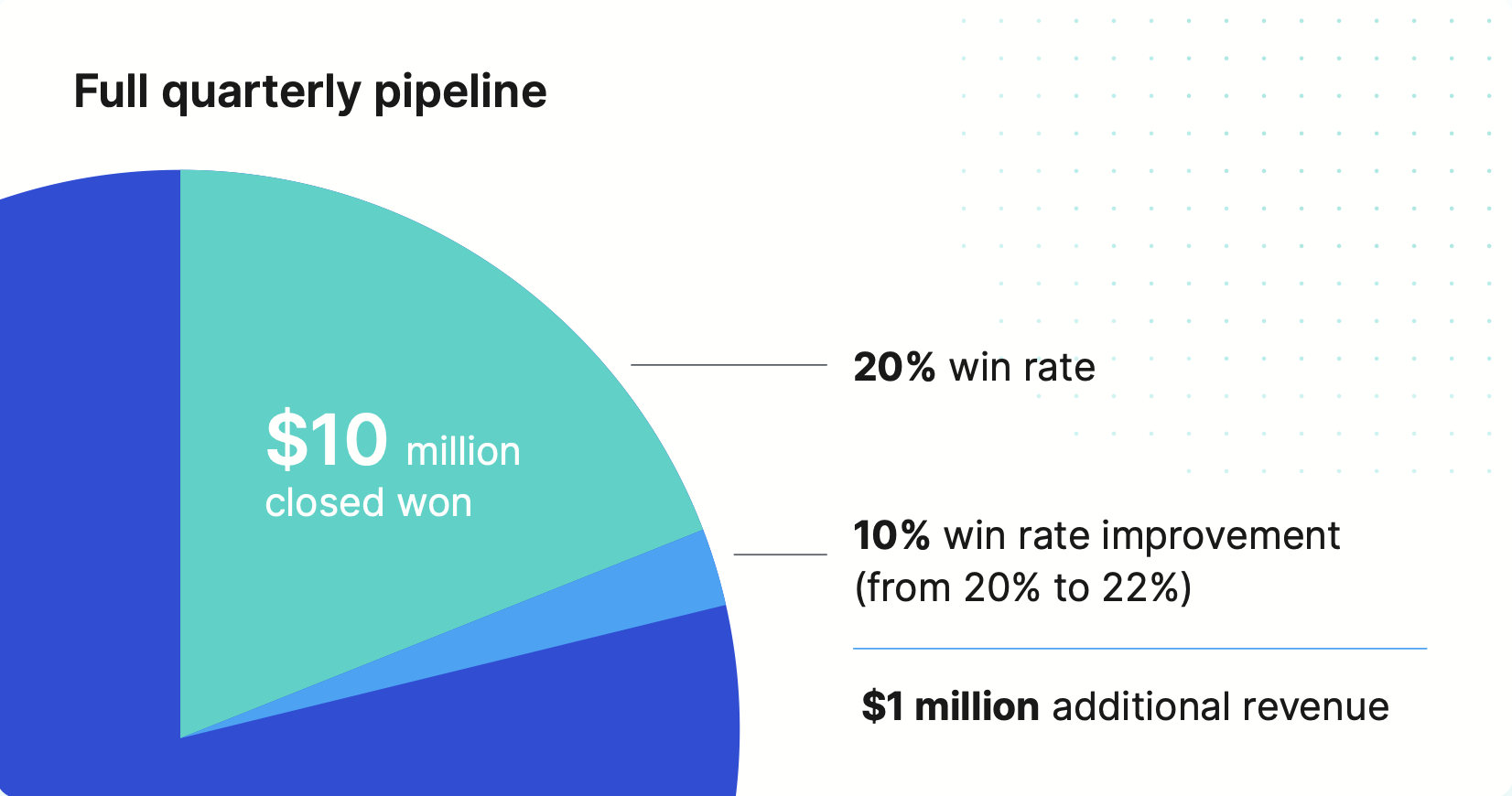
Consider, for example, a company with $10 million in quarterly sales bookings anda historical win rate of 20%. A small win rate improvement of just 10% (from 20% to 22%) would result in additional bookings of $1,000,000 per quarter. Thus, the annual ROI from their win-loss investment would be at least $4,000,000, minus the cost of the program.
Secure executive & cross-functional sponsorship
Get buy-in at the top, then make it a top-down initiative
Business transformation is only possible when senior leaders are closely involved.
As you prepare to meet with your executive team, consider this statement from a Gartner report on win-loss analysis:
You can use the information in the introduction section as a guide to engage your executive team and build a compelling business case for why they should sponsor a rigorous win-loss program.
“The entire leadership team is making use of the data we’re getting from win-loss analysis—not just for sales or product, but also for CSMs, for our engineering team, for service and support, for our churn analysis. The win-loss insights that are being provided have now matured—beyond just helping the sales and product teams understand what buyers like or don’t like—to how the market is perceiving the overall experience that we’re now able to give our customers.”
—Deanna Ballew, SVP of Product at Acquia
For additional information about how to build a successful business case for win-loss analysis, read this blog post and check out our custom revenue calculator.
Running a win-loss program is great for your company—and it’s also great for you
That’s right, we’re talking about you personally.
It’s common for individual contributors to recognize the glaring need for win-loss analysis at their organizations. And when they work to prove its value, secure executive and cross-functional buy-in, and deliver positive results, people around them notice.
One example is Jason Klein, a product marketing director at Alteryx.
Alteryx was looking for precise, competitive comparisons with other vendors in their space. After deciding the most effective strategy was to create a robust, voice-of-customer (VoC) feedback loop, they partnered with Clozd to build out their win-loss analysis program.
Jason—who was then a marketing intelligence analyst—took ownership of the program.
His ability to share sales experience insights and competitive differentiators—data captured directly from their buyers through their win-loss analysis program—increased the effectiveness of Alteryx’s sales training sessions. It also gave his career a significant boost.
“I’ve been on a good career trajectory here at Alteryx,” he said. “I don’t think I’d be here as quickly without Clozd. Me being ‘the win-loss guy’ has accelerated my career growth.”
Read more on how Alteryx wins more with Clozd
By making win-loss analysis a top-down initiative, you—like Jason—can unite your organization around the program, build momentum, drive org-wide transformation, and propel your career forward in meaningful ways.
Securing the support of cross-functional leaders will increase your ROI
Once you’ve secured executive sponsorship, start working with the leaders of each relevant department—usually marketing, sales, product, and client success—to educate them, gain their support, and solicit their input.
The introduction to this guide is a great place to start building value with each of these teams.
Here’s one example of how educating other teams about win-loss analysis can bemutually beneficial …
Your sales leadership team may be interested in (and perhaps want a proof of concept about) the benefits of win-loss analysis for sales coaching and enablement. Helping them understand and embrace the program will ensure that you have access to the resources you need to make the program a success—such as relevant CRM data.
Your efforts to work with each individual functional leader (e.g., head of sales, product manager, marketing director, etc.) will ensure that each department’s needs are addressed and that everyone is on the same page—which plays a huge role indesigning and executing a comprehensive and transformational program.
You’ll also eliminate redundant or siloed efforts that stem from multiple people or teams trying to solve the same problem.
"It’s surprising how often we discover multiple teams at the same company trying to implement win-loss analysis simultaneously. These redundant efforts are wasteful and counter productive. They’re the result of poor communication between departments and a lack of executive sponsorship.”
Andrew Peterson
Co-founder and Co-CEOat Clozd
One other benefit of open communication and cross-functional collaboration is that leaders who are involved while you’re setting your program up are far more likely to adopt the findings later on. As you work to inform and involve department leaders, it’s far more likely that they’ll accept the findings and act on the insights.
If you’re able to secure the buy-in of your leadership team at the outset of your program, you’ll see a stronger return on your investment.
Start with the data that you already have
One of the problems many companies face is that their CRM data is incomplete or unreliable (or both). Nobody wants to make critical business decisions based on baddata, which is why obtaining feedback directly from your buyers is critical.
That said, analyzing the data you already have is still important. It helps you identify initial areas for improvement and create a tailored plan for your win-loss outreach.
Choose your feedback channels
Capturing win-loss feedback
It’s also important to understand that in-depth, unbiased feedback from your buyers is far more useful than feedback from your sales team. Studies (including, but certainly not limited to, our own) show that sales reps are wrong about why deals are won and lost 60–85% of the time.
Live buyer interviews—the most powerful feedback channel
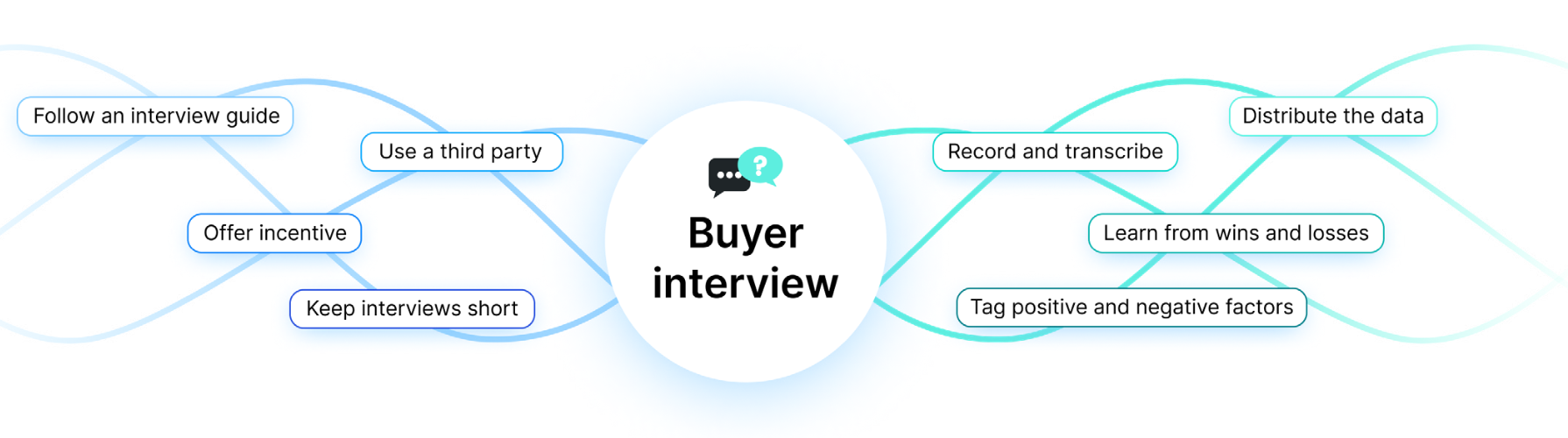
Win-loss interviews are the best way to get meaningful feedback from your prospects and customers.
The quality and depth of the insights captured through win-loss interviews are considerably higher than any other feedback channel—including buyer surveys. This is why every organization should incorporate interviews into their win-loss program on an ongoing basis.
Below are some of the best practices to apply when conducting buyer interviews.
We’ve found that buyers—for a variety of reasons—are often more open and honest when they’re talking with an objective third party like Clozd.
Asynchronous buyer interviews—getting deeper feedback at scale
Your buyers are busy, and sometimes it’s difficult to find time for a traditional live interview.
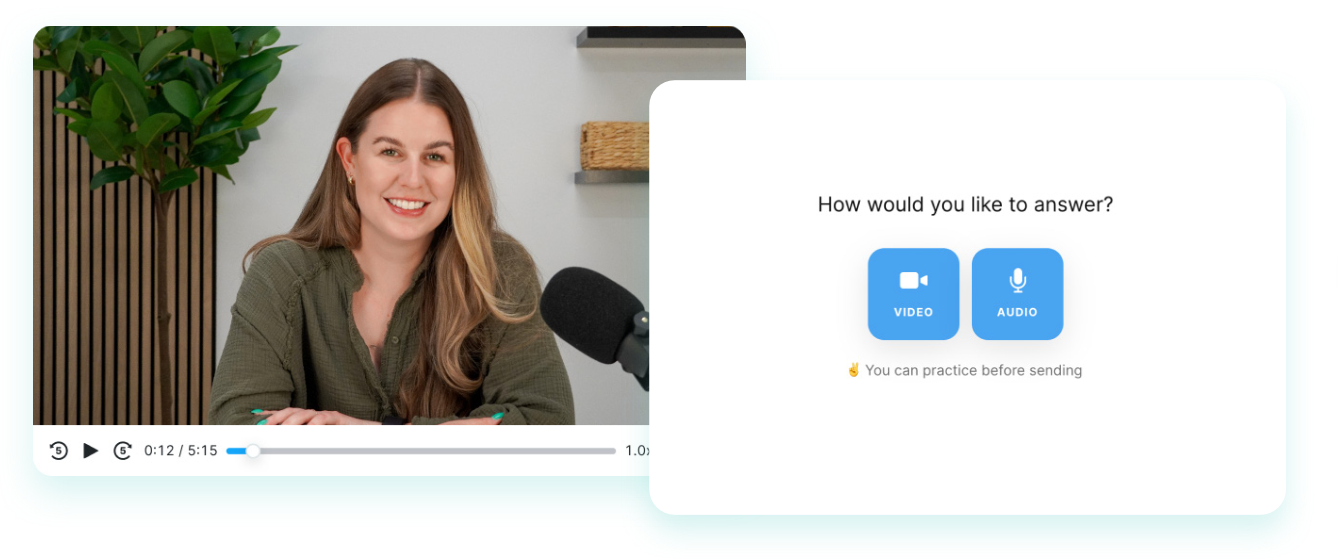
In these cases, asynchronous interviews—where you record the questions you want to ask, and your buyers have the flexibility to respond when and where it’s most convenient for them—can be a useful alternative to live interviews.
Once the interviews are complete, you can then analyze the feedback and deliver impactful insights
Buyer surveys
Buyer surveys cost less than interviews, which helps you scale your program by collecting additional win-loss data and reaching a broader, more representative sample of your pipeline. Surveys can be useful for tracking high-level trends that can help you determine where to focus your interviews.
As a best practice, use surveys to solicit feedback from any buyers that you do not plan to interview.
Survey feedback isn’t as rich as interview feedback because surveys are shorter in duration, the questions are predefined, and participation rates are significantly lower (3–5% for surveys vs. 15–20% for interviews). Because of this, it’s best to usesurveys to complement your interview strategy.
Interviews vs. Surveys: Consider your pipeline
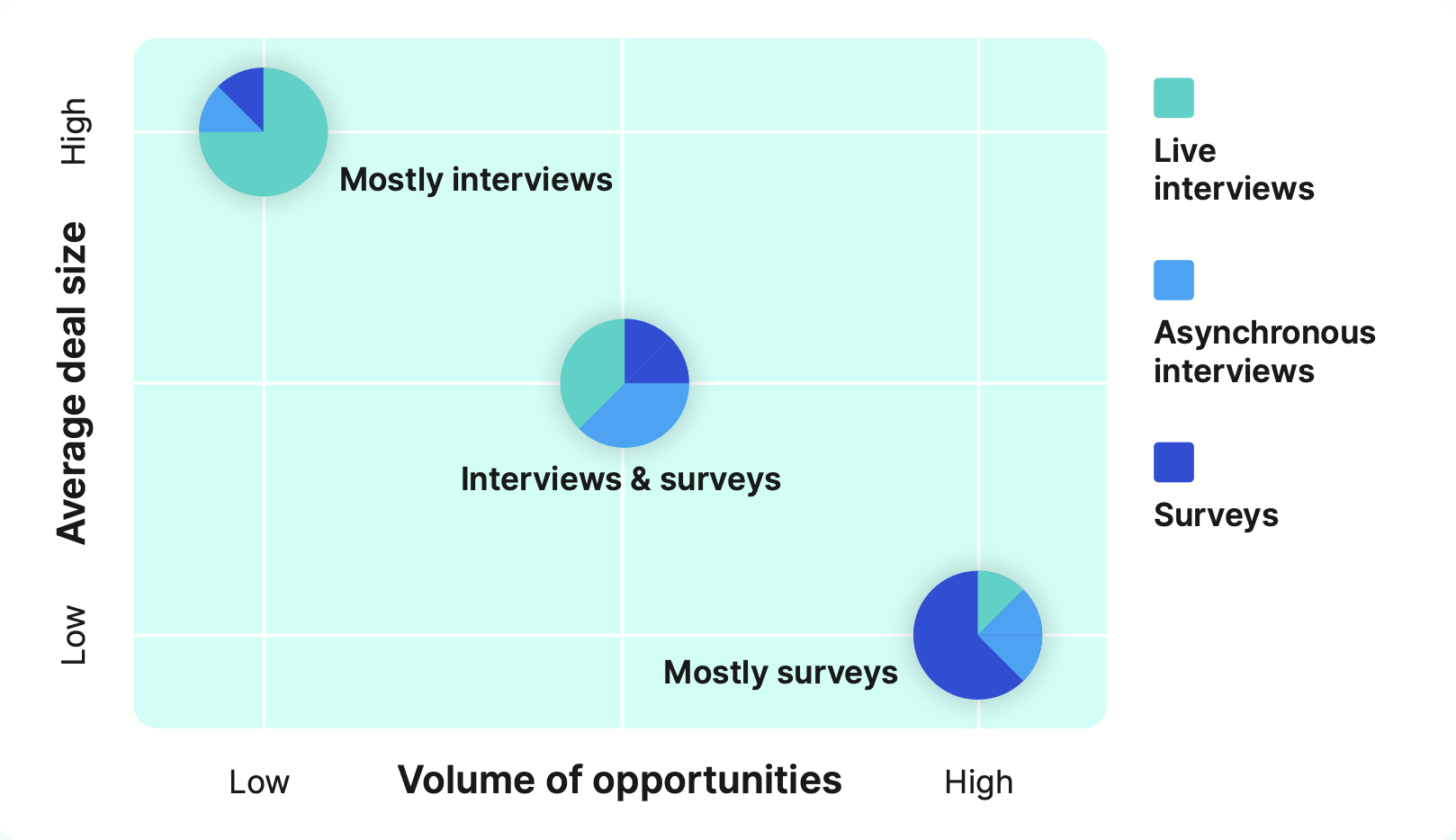
As you evaluate the pros and cons of buyer interviews and surveys to determine the right mix for your win-loss analysis program, make sure you consider the makeup of your sales pipeline (e.g., deal size, volume, and complexity) and the cost of the different feedback channels. The goal is to create a program that delivers powerful insights across your entire pipeline—as well as a strong return on your investment in win-loss analysis.
Some organizations build their win-loss programs based entirely on win-loss interviews. Depending on your deal volume, however, it may be cost-prohibitive to interview every closed opportunity. This is why we recommend utilizing different feedback channels and conducting interviews on a targeted basis to better understand key opportunities and key segments of your pipeline.
The chart below illustrates this general idea.
To help our clients create the right mix of feedback channels, we offer flexible interview options designed to fit each company’s objectives and budget.
Feedback channels FAQs
How many win-loss interviews should we conduct?
In general, more is better—but many organizations have limited budget and/or resources. If you can’t attempt an interview for every closed opportunity, focus your interviews on the most important deals or segments of your pipeline and aim to achieve saturation. In qualitative research, saturation is the equivalent to statistical significance and usually takes 25–30 interviews for a well-defined population. For this reason, many B2B organizations conduct around 25–30 interviews on a quarterly basis.
What are typical interview participation rates?
Participation rates vary widely based on factors like role, seniority, industry, recency, deal size, and more. That said, we commonly see average participation rates between 15–30%. Several methods can drive an increase to your win rate: offering monetary incentives, better messaging, multiple contact methods, leveraging a third party, and more.
Why is it important to leverage a neutral third party?
According to the Pragmatic Institute, “The odds are stacked against most organizations that are trying to conduct [win-loss] interviews internally. Several tendencies contribute to this problem: difficulty in achieving objectivity, inaccuracy of self-diagnosis, lack of continuity metrics, discretionary priorities. ... If the task is too daunting for an organization, then it must be outsourced.”
How do you determine the right questions to ask in your win-loss interviews?
Interviews should be adaptive conversations, not scripted surveys, so each interview will be different. In general, try to follow these three guidelines …
1. Keep your question methodology simple
2. Focus on the key factors and drivers that influenced the final decision
3. Use interviews to dive deep and uncover blind spots
For more information about interview best practices, check out our blog post on what questions to ask
Automate ongoing feedback collection
The reasons you win and lose constantly evolve
Build a long-term program, not a short-term fix
Sometimes a sudden emphasis on win-loss analysis stems from a painful lost deal or a disappointing quarter. In other cases, the executive team may demand immediate answers to why the company wins and loses.
In any of these cases, a hurried, ad hoc analysis is the wrong approach.
A report from Gartner provides this guidance: “Managers implementing a strategic win-loss analysis program must make sure valuable and sustainable flows of objective feedback are created to support the process. Win-loss analysis programs often fail when trying to deliver a short-term fix. … Create a [process] that is oriented toward an extended time horizon.”
Your win-loss program needs to act as an ongoing, real-time diagnostic of why you’re winning and losing. You may start with a short-term effort as a proof of concept, but always work toward the end goal of establishing a robust, ongoing process for capturing and analyzing win-loss data.
For our most recent State of Win-Loss Analysis Report, we obtained feedback from nearly 700 companies and found that 83% of them practice some type of win-loss analysis—but only 30% have an ongoing, cross-functional program.
Capture win-loss data continuously & monitor trends over time
Win-loss analysis should be an ongoing process that delivers VoC insights and drives revenue for your company.
To truly build a competitive advantage, collecting win-loss data and creating a continuous stream of insights about why you win and lose must become a natural part of how your company operates. This approach requires more initial effort and investment—but it also yields far greater results over time.
Not only will you be tuned in to the current reasons you’re winning and losing, but you’ll be able to monitor important trends and changes. This data will enable you to make strategic, revenue-driving decisions with confidence.
Analyze the results
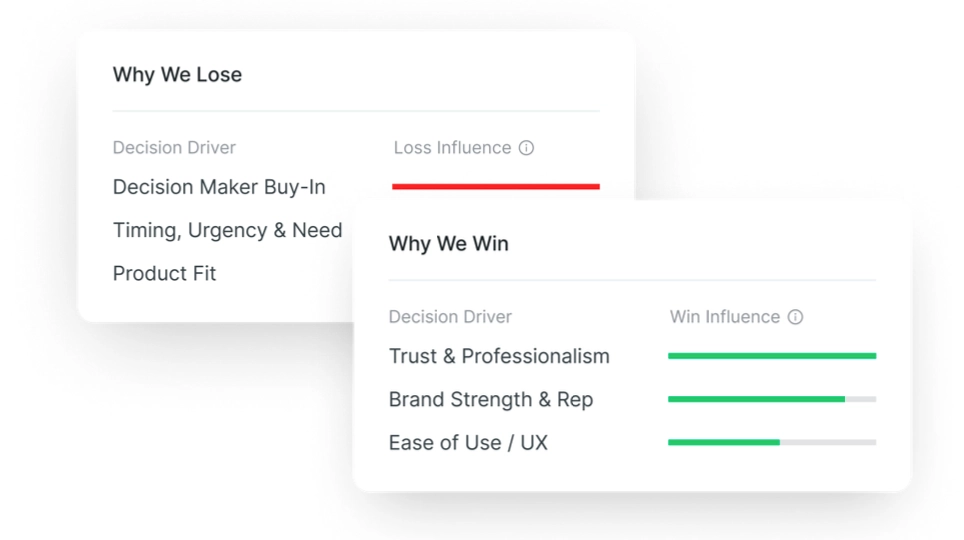
Surface positive and negative Decision Drivers by channel
Carefully track your Decision Drivers as win-loss data flows in from each channel. Pay attention to the factors that consistently influence buyers toward purchasing your solution (positive drivers) and vice versa (negative drivers). Rank the drivers according to their frequency (how often they appear) and their sentiment (whether they have a positive or negative influence).
Keep track of how the frequency and sentiment of your drivers change over time, and never lose sight of the main purpose of your program—to identify the reasons why you win and lose.
Use CRM data to apply context and to filter
We’ve already talked about using your CRM data as a starting point for your win-loss analysis program. As you analyze why you win and lose, you can also use it to filter your drivers and add context to each deal.
It’s likely that the reasons you win and lose will vary across key segments of your business. Consider breaking down your win and loss reasons by the following criteria:
A practical example of this would be to use a CRM field like “customer segment” to compare win-loss Decision Drivers across your enterprise, mid-market, and small-business segments. Unsurprisingly, most organizations find that buyer preferences, needs, and decision criteria vary widely when comparing enterprise accounts with small-business accounts.
Recognize that confirmations are as valuable as new discoveries
Your win-loss analysis program will either confirm or refute the hypotheses or beliefs you already have about why you win and lose. Both outcomes provide direction and confidence in your path forward.
When the data confirms your assumptions, the initial reaction of some leaders maybe dismissive: “I already know this.”
But when win-loss data confirms something they already “knew,” it instills confidence and helps everyone else get on the same page. These confirmations drive alignment and lead to action, which is why they’re just as valuable as new discoveries.
Share your findings widely
Provide broad access to win-loss insights
The data you capture from your win-loss program is valuable, so don’t hold it hostage. It’s easy for insights to lose their strength when they’re trapped in a spreadsheet.
Promote a culture of transparency by making your win-loss findings accessible to everyone.
Companies that share the feedback widely—without censoring it—achieve the best results. According to our research, 68% of companies that distribute win-loss data to the majority of their employees report an increase in win rate because of win-loss analysis. The more employees that can access the findings, the better.
Sharing the feedback enables many people—at various levels of the organization—to optimize their own performance, enhance customer empathy, and drive meaningful change within their sphere of influence.
The introduction to this guide outlines many of the roles that benefit from access to win-loss data. Make sure that each of these stakeholders has easy access to the program results.
Data transparency and democratization are critical to ensuring a meaningful return on your investment.
Push relevant insights to key stakeholders in real time
As we’ve already discussed in this guide, win-loss insights have the most value when they’re honest, organized, and shared.
There’s one additional point: Insights are most powerful when they’re timely.
If possible, it’s best to automate the delivery of reports through typical work streams like email, Slack, and your CRM. Giving stakeholders real-time access to the data will help maximize the impact of your win-loss insights.
Executives often process and internalize win-loss data better when it’s delivered in small, consistent doses—rather than one massive data dump at the end of the year or quarter. By delivering the data to stakeholders in real time, your program will become an active part of how those leaders operate and make decisions.
Consider the tactics below to help drive ongoing stakeholder engagement.
For an example of how we organize, analyze, and deliver powerful competitive insights, feel free to check out the Clozd Platform.
Measure your success
Watch for weaknesses that turn into strengths
As you analyze your win-loss drivers over time, watch for factors that are trending in a positive direction. It’s common to see drivers that were once consistently negative evolve into strengths.
Pay special attention to drivers that are points of emphasis for your leadership team. Watch to see if the programs and tactics they implement end up having a positive impact over time. In this way, win-loss analysis will become a valuable feedback loop that validates successful initiatives.
Measure your ROI
One reason the CRM data channel is so important is because it enables ongoing, real-time monitoring of key metrics like your sales win rate. As you roll out your win-loss analysis program, be sure to monitor its impact on your win rate over time.
Even small win-rate improvements translate to significant revenue gains.
As you measure your win rate, make sure you only examine areas of the business that fall within the program’s scope. If you don’t yet have win-loss data coverage for your entire sales pipeline, don’t assume that the program will drive changes to your company’s overall win rate. As you expand your program over time, its impact on your win rate will increase. Beyond increasing your win rate, win-loss analysis can improve performance and drive revenue in many other ways. Consider asking the questions below as a way to measure the impact of win-loss analysis on your business.
Highlight success stories to justify further investment
As you identify these success stories, share them with your leadership team andother relevant stakeholders. This will validate that your time has been well spent and that the investment has been—and will continue to be—worth while. This added momentum will drive program expansion and even greater results in the future.
FAQs
Q: What's the difference between win-loss analysis and a win-loss program?
Win-loss analysis is the activity of uncovering why you win and lose deals. A win-loss program is the ongoing, cross-functional system — with executive sponsorship, clear ownership, automated feedback collection, and regular measurement — that makes that analysis repeatable and revenue-driving.
For more on getting started with the help of a third-party, check out our win-loss analysis software page.
Q: Who should own and run a win-loss program?
Most win-loss programs are owned by a single accountable lead — often in product marketing, competitive intelligence, or revenue operations — who drives collection, analysis, and distribution. Many teams pair an internal owner with a neutral third-party interview partner to keep feedback objective and reduce the operational load.
Q: Who should be involved in a win-loss program?
A strong program is cross-functional.
Executives sponsor it; sales uses it to coach and replicate wins; marketing sharpens messaging; product informs the roadmap; and customer success reduces churn. The broader the access, the higher the win-rate lift.
Q: Should you run your win-loss program in-house or outsource it?
Both models work. In-house gives you control; a neutral third party gets more candid feedback — buyers are consistently more open with an objective interviewer than with the vendor. Many programs blend the two. Explore expert led interview services to see how outsourced collection works.
Q: How do you measure the ROI of a win-loss program?
Track your sales win rate over the segments your program covers, since even a small win-rate lift drives large revenue gains. Layer in ramp time, retention, and revived deals. Our State of Win-Loss report benchmarks what mature programs achieve.





.svg)